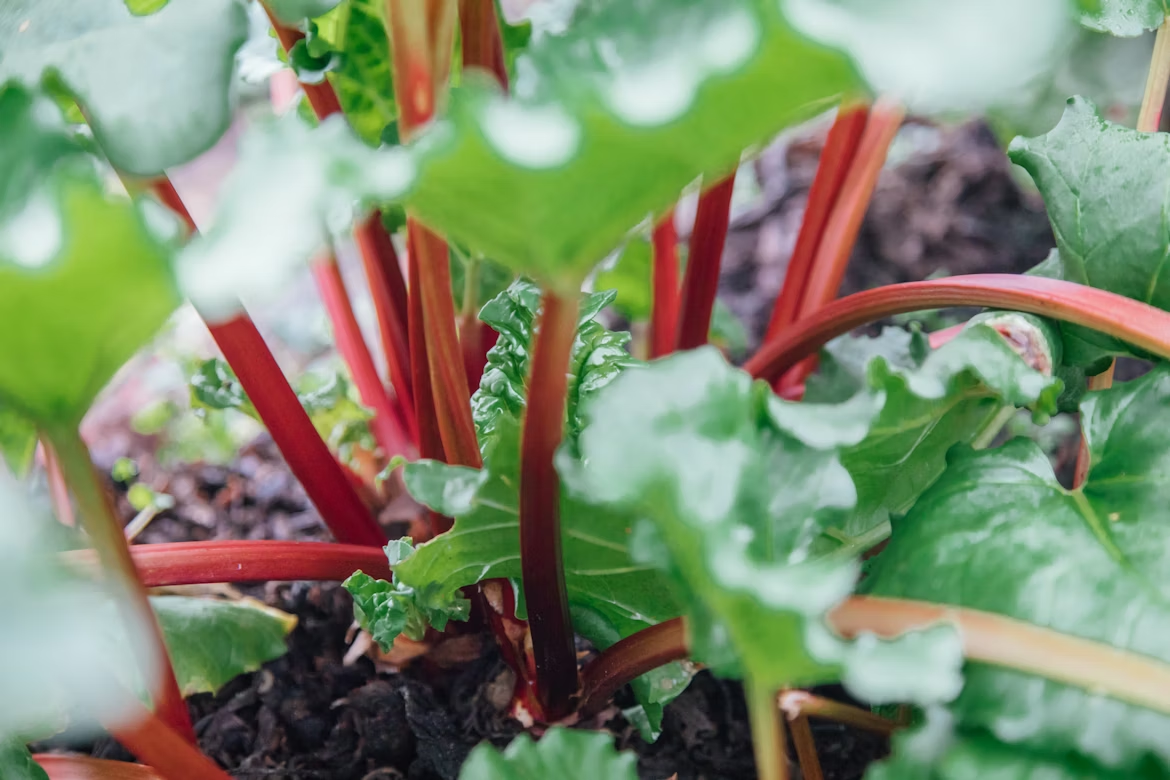
The History of Rhubarb in American Cooking
Rhubarb has been used for centuries, first as medicine and later as a tart seasonal ingredient in pies, crisps, and cakes. This quick history explains how rhubarb reached America, why it’s nicknamed “pie plant,” and how it became a spring baking tradition.
Rhubarb, often treated as a fruit in desserts despite being a vegetable, has a rich history that spans continents and centuries
before becoming a staple in American kitchens. Originating in the cold climates of northern Asia, including China and Mongolia, rhubarb
was primarily used for medicinal purposes for over 5,000 years, valued for its laxative and healing properties. Its roots were dried
and powdered, serving as a tonic for digestion and other ailments, and by the Middle Ages, it was a costly import in Europe, more
expensive than spices like cinnamon. Rhubarb history, rhubarb cake recipe, history of rhubarb.
The plant’s introduction to America dates back to the 1730s, when botanist John Bartram received seeds of Siberian and Rhapontick
rhubarb from Peter Collinson in London. Bartram, a pioneering figure in American botany, is credited with being the first to cultivate
rhubarb in North America at his garden in Philadelphia. In 1770, Benjamin Franklin further aided its spread by sending seeds of
the “true rhubarb” to Bartram from London. Alternatively, some sources attribute its arrival around 1800 to an unnamed Maine farmer
who imported seed or root stock from Europe, from where it migrated south to Massachusetts and beyond. By the 1820s, rhubarb had
established itself in New England markets and seed catalogs, becoming a common sight along the Eastern Seaboard by 1822.
The shift from medicinal to culinary use in America was influenced by European trends, particularly in Britain, where affordable sugar
in the 19th century allowed for sweetening the tart stalks. In the U.S., rhubarb’s popularity surged as an early spring crop, providing
a fresh, fruit-like option after winter when stored apples often spoiled. It earned the nickname “pie plant” in 19th-century America
due to its primary role in tarts and pies, a tradition that began with one of the earliest printed recipes in Maria Eliza Ketelby
Rundell’s 1806 cookbook, A New System of Domestic Cookery, which gained traction through its Boston editions starting in 1807.
Rhubarb’s versatility expanded in American cooking, appearing in upside-down cakes, crumbles, sauces, salads, and preserves like jam.
It thrived in regions like New England and the Midwest, where it became a low-maintenance perennial in home gardens, symbolizing the
arrival of summer with its nutrient-rich stalks packed with vitamin C, potassium, and fiber. Commercial production peaked before
World War II, concentrated in states like Washington, Oregon, and California, but declined due to sugar rationing during the war.
A notable legal milestone came in 1947 when the U.S. Customs Court ruled rhubarb a fruit for tariff purposes, underscoring its
dessert-centric identity.
Today, rhubarb remains a beloved ingredient in American cuisine, evoking nostalgia for rural traditions and
simple, seasonal baking. Its journey from an exotic medicinal import to a backyard pie filling highlights the adaptability of immigrant
plants in shaping the nation’s food culture.
Rhubarb Recipes
Rhubarb History FAQ
Why is rhubarb called “pie plant”?
Rhubarb became famous in American kitchens as an early spring ingredient for pies and tarts, earning the nickname “pie plant.”
Is rhubarb a fruit or a vegetable?
Botanically rhubarb is a vegetable (a stalk), but it is often treated like a fruit in desserts.
Which parts of rhubarb are used for baking?
The stalks are used in cooking and baking. Rhubarb leaves are not used.
Related Resources
Search the Cookbook