📐 The Mudroom & Sub-Surface Drainage Grid
Select a structural module below to review floor material specifications, layout measurements, and water-diversion rules.
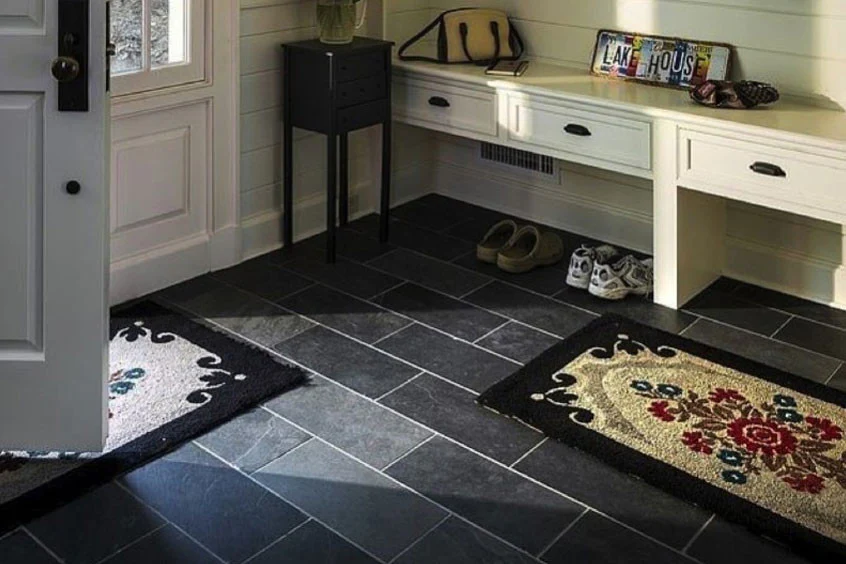
Zone 1: Salt-Isolation Flooring
Material Spec: Grade-5 Impervious Porcelain Tile or Luxury Vinyl Plank
Grout Requirement: 100% Waterproof Epoxy Grout Only
Layout Rule: Minimum 6x4 Foot Primary Entry Drop Footprint
Target Risk: Subfloor Rot & White Salt Ring Staining
Never use standard ceramic tile or hardwood near an Upstate entryway. Road salt easily eats away cementitious grouts, allowing brine to seep beneath to rot the plywood subfloor. Install impervious porcelain tile laid with commercial epoxy grout to create an entirely pressure-washable wet basin.
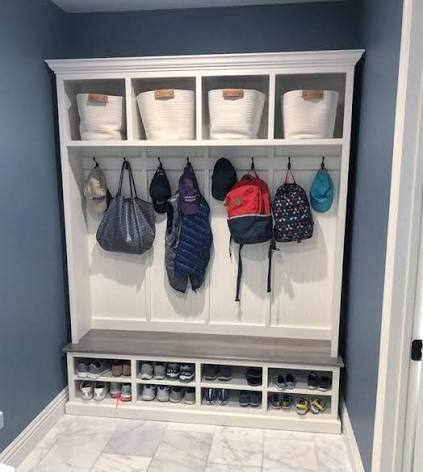
Zone 2: Heavy Slush Containment Benches
Material Spec: Sealed Marine-Grade Plywood or Composite Board
Airflow Needed: Dedicated Low-Wall Forced Air Register Vent
Layout Rule: Elevated Open Slatted Cubbies (2 Inches Off Floor)
Target Risk: Standing Puddles & Black Mold Build-up
Closed closets trap heavy, stagnant humidity, creating an optimal breeding ground for mold on wet winter coats. Design an open-concept storage bench featuring elevated, slatted boot trays. Positioning a HVAC heating register directly beneath ensures constant dry air flows up through soggy gear.
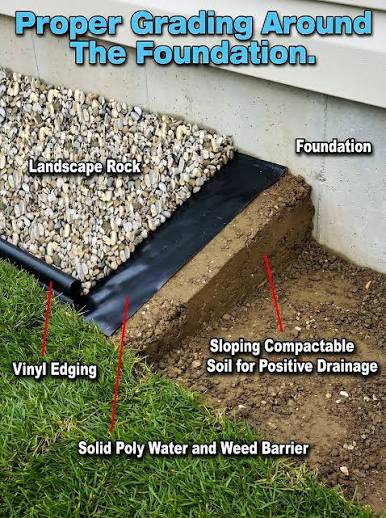
Perimeter Grading & Slope Controls
Material Spec: High-Clay Content Soil Cap topped with Gravel/Mulch
Slope Target: Drop of 6 Inches across the first 10 Feet Outward
Layout Rule: Maintain Minimum 4-Inch Concrete Siding Clearance
Target Risk: Basement Wall Bowing & Hydrostatic Seepage
When massive lake-effect snowpacks melt rapidly during mid-winter thaws, flat or reverse-sloped perimeter soil fills with water. This exerts immense hydrostatic force against your block walls. Pack a solid clay base around the frame, sloping it away sharply to shed runoff before it descends.
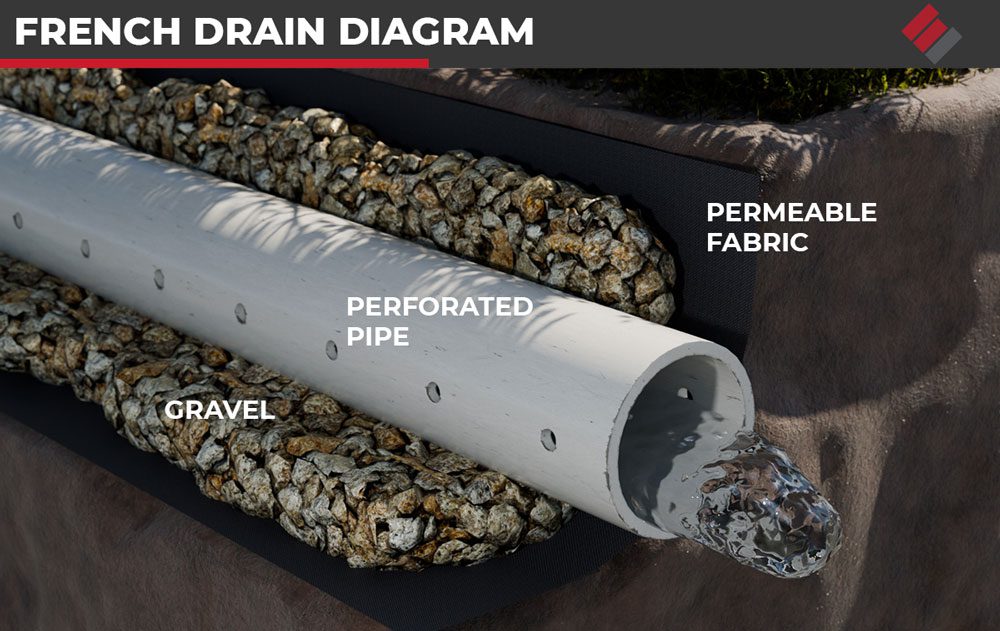
Subsurface French Drain Plumbing
Material Spec: Schedule 40 Perforated Rigid PVC (Holes Facing Down)
Aggregate Spec: 1.5-Inch Washed Crushed Stone & Non-Woven Fabric Filter
Layout Rule: Trench Depth at least 18 Inches; Sloped 1% to Day-lite
Target Risk: Saturated Frost Heaves & Perimeter Saturation
If your yard stays swampy through December, your basement is guaranteed to leak. Dig a dedicated perimeter curtain trench lined with porous, non-woven geotextile fabric. Lay smooth washed stone over smooth rigid perforated PVC pipe to intercept sheets of sub-surface ground water.
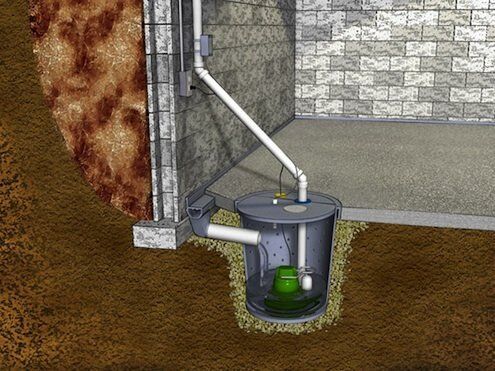
Sump Pump Pit & Mechanical Redundancy
Material Spec: Cast-Iron Submersible Pump (Minimum 0.5 Horsepower)
Backup Need: 12-Volt Battery Backup Pump or Water-Powered Line
Layout Rule: Dual Spring-Loaded Check Valves on Discharge Run
Target Risk: Grid Failures during Spring Freeze-Thaw Disasters
Syracuse thaws often coincide with high wind storms that knock out overhead power grids. A single, wall-powered sump pump will fail exactly when you need it most. Install a heavy cast-iron primary pump alongside an independent battery-operated secondary system inside a clean, sediment-free plastic basin.
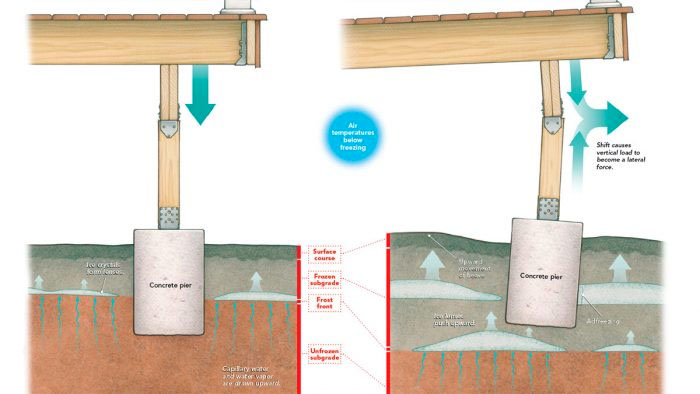
Frost-Line Footing Depth Standards
Primary Target: Minimum 42-Inch Depth Below Finished Grade Line
Material Spec: 4000 PSI Air-Entrained Structural Concrete Mix
Layout Rule: Smooth Sonotube Pier Forms to Prevent Soil Grip
Target Risk: Heaved Decks, Cracked Steps, & Jagged Door Frames
In Central and Western NY, frost regularly drives over three feet deep into the subsoil. Any porch pier, entryway staircase, or structural pad poured above this 42-inch depth marker will lift and crack as frozen groundwater expands. Always drill deep below the frost line to guarantee absolute structural stability.